

A new riverside space is now open to the public following the completion of London’s ‘super sewer’ works.
Bazalgette Embankment is a 1.5-acre public space built out into the Thames with stunning and completely new vistas of the river.
The space was required as a worksite to build new underground infrastructure as part of the Thames Tideway Tunnel project – which is now protecting the Thames from sewage pollution.
Below ground, vast new culverts, pipes and vortexes intercept sewage flows that previously spilled directly into the river, and channel them into a 25km-long ‘super sewer’ that runs beneath London.
Above ground, the space has been carefully landscaped into London’s newest riverside park, complete with 71 trees, thousands of plants, huge permanent sculptural artworks and a range of seating for Londoners and visitors to enjoy.
And now, for the first time in nine years, the space is open to the public - having launched in January.
Roger Bailey, Tideway’s chief technical officer, said: “Opening this space marks a major milestone for London: the river is cleaner, the city is greener, and our connection to the Thames has been renewed.
“What began as a vital construction site for the super sewer has been transformed into a remarkable public space – a place to pause, explore and enjoy the river in a way that hasn’t been possible for generations.
“Bazalgette Embankment stands as a celebration of what thoughtful engineering and long-term investment can deliver for the capital and for everyone who calls it home.”
Elsewhere, more than 3,000 trees and shrubs have been planted to create the soft landscaping of the green terraced area, creating a welcome new space to pause and linger in the historic Square Mile.
Bazalgette Embankment is the sixth of seven new, public riverside spaces created as part of the super sewer project to open – and by far the largest. Other spaces have been opened in Putney, Chelsea, Vauxhall, Nine Elms and along Victoria Embankment.
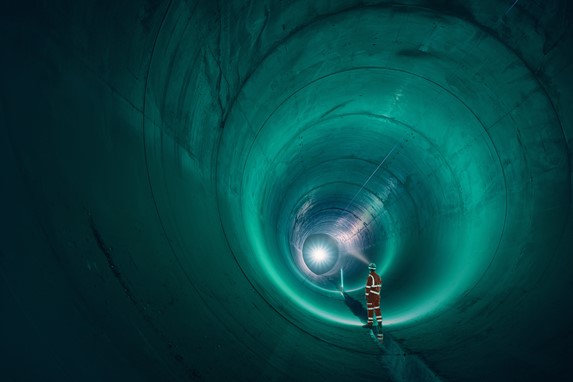
London’s combined sewage system handles human waste and rain runoff. But the capital’s population has outgrown the infrastructure and, until recently, when the rain came it completely overwhelmed London’s network, triggering overflows of sewage into the River Thames.
The new Thames Tideway Tunnel – a cavernous concrete tube as wide as three London buses – now stretches for 25km below the capital. It sits ready and waiting to store sewage overflows when the heavens open and the network fills up, until it can be processed.
It has been fully protecting the Thames since February 2025 and has already intercepted more than 13 million tonnes of storm sewage that would have otherwise spilled into the Thames.
Planning for the Thames Tideway Tunnel was approved back in 2014, with construction starting two years later at two dozen sites from Acton in west London to Abbey Mills Pumping Station in Stratford, East London.
More than 20 deep shafts – some as wide as the dome of St Paul’s Cathedral – were constructed across London to divert sewage flows and to lower tunnelling machines into the ground to complete four years of digging by 2022.
With some of the system coming on line in 2024, the tunnel became fully functional in 2025, connecting with Thames Water’s existing 7km Lee Tunnel.
As well as keeping 95% of waste out of the river and drastically cutting pollution, the tunnel scheme is making the Thames cleaner for wildlife and people. It has created new public spaces allowing people to enjoy the river like never before and futureproofed London’s sewage system in an era of growing population and climate change. It is reconnecting London with its river.
Find out more about how and why the super sewer was constructed in the latest edition of our Infrastructure Intelligence magazine – the Future of Water. Read our exclusive interview with Tideway’s chief technical officer, Roger Bailey. Click here to download your copy.
News categories: Infrastructure Intelligence
- Share this page
-

-


