

A pioneering £23m upgrade of the Severn Tunnel – a vital rail link between South Wales and England – has been completed.
Over 16 days, Network Rail and its contractor ARQ (AmcoGiffen, REL and QTS) have completed work to the overhead line equipment and power supply inside the Severn Tunnel, helping to improve reliability on the cross-border rail route.
The 4.35-mile tunnel beneath the Severn Estuary faces some of the most challenging conditions due to the combination of saltwater, moisture and a highly corrosive atmosphere. Network Rail developed a new overhead line system specifically designed for the tunnel's harsh environment.
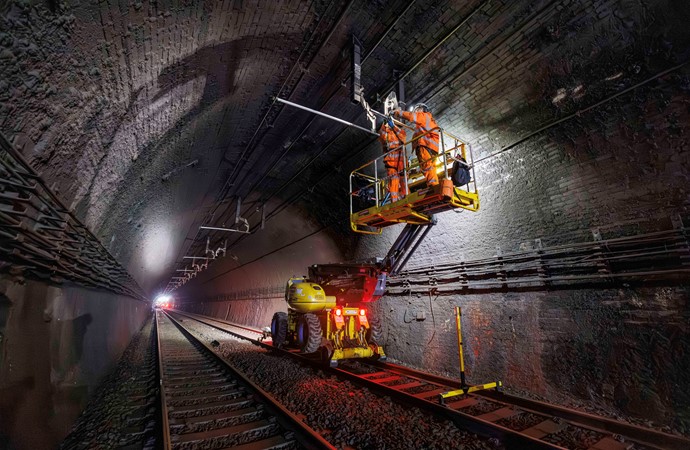
Backed by a £23m investment, the simplified design uses modified bridge arms and a continuous copper contact wire to create a more resilient and reliable railway while reducing future maintenance requirements.
Following a successful trial on the Cardiff-bound line in 2025, teams from Network Rail, and contractor ARQ, have now completed the installation on the Bristol-bound line, delivering the first large-scale deployment of the system anywhere in the world.
Around 250 engineers worked around the clock, from 23 May, to deliver the transformation. The railway has now reopened. The project included:
- Replacing 838 overhead line support arms
- Installing 14,000 metres of new wiring
- Installing more than 7km single copper contact wire supported by modified bridge arms
- Removing and replacing 7,200 metres of ageing equipment throughout the tunnel
Nick Millington, route director at Network Rail Wales and Borders, said: “The Severn Tunnel is one of the most challenging environments anywhere on the UK rail network, so completing this upgrade is a significant achievement for everyone involved.
“Following a successful trial last year, we've now delivered a world-first engineering solution at scale, designed specifically to withstand the uniquely harsh conditions inside the tunnel. This is the result of years of innovation, planning and collaboration between Network Rail and our industry partners to solve a long-standing challenge on a vital rail link between South Wales and England.”
News categories: Infrastructure Intelligence
- Share this page
-

-


