
The Consultancy and Engineering Awards 2026 are taking place on 1 December. Ahead of the big night, headline sponsor Matchtech, looks at the skills challenges facing our sector – and why great people are behind great infrastructure. Operations director Jason Clements and head of equality, diversity and inclusion (ED&I), Annabel Honour, share their thoughts.
What are the biggest workforce challenges facing the consultancy and engineering sector over the next five years?
The biggest challenge is simple: demand for infrastructure is growing much faster than the supply of experienced people. Across rail, highways, water and energy we're seeing the same issue. There are plenty of projects, plenty of funding commitments and plenty of ambition, but not enough engineers, project professionals and technical specialists to deliver them all. The sector is also carrying a demographic challenge. Many of the people who built and maintained our infrastructure over the last 30 years are approaching retirement, and in too many cases there isn't a strong enough pipeline coming through behind them. The risk isn't a lack of work. It's having enough skilled people to deliver it safely, efficiently and on time.
With major programmes across transport, energy, water and housing competing for talent, where do you see the greatest pressures emerging?
The biggest pressure will be around experienced mid-career professionals. Graduates are important, but the people in greatest demand are typically those with five to 15 years' experience who can lead teams, manage projects, sign-off designs and mentor others.We're already seeing competition for civil engineers, project managers, design managers, commercial professionals and specialists in areas such as systems engineering, environmental disciplines and digital delivery. Water, rail and energy are all drawing from a very similar talent pool, which means organisations are increasingly competing for the same people.
How are changing skills requirements, particularly around digitalisation, AI and net zero, reshaping recruitment needs?
The industry still needs great engineers, but the skillset is evolving. We're seeing a growing demand for professionals who can combine traditional engineering knowledge with digital capability. Whether that's BIM, digital twins, data analytics, asset management systems or AI-enabled planning tools, these skills are becoming far more valuable. Net zero is creating another shift. Clients increasingly want people who understand sustainability, carbon reduction, climate resilience and whole-life asset performance, alongside their core engineering expertise.The future engineer will need to be technically strong but also digitally confident and commercially aware.
What is the sector doing well when it comes to attracting new talent, and where does it still need to improve?
The sector is doing a much better job of promoting purpose.Young people can see that infrastructure directly impacts people's lives. Clean water, safe transport networks, energy security and climate resilience are powerful reasons to join the industry. Where we still need to improve is awareness. Too many young people still don't understand the range of careers available in engineering and consultancy. As an industry we need to engage earlier, work more closely with schools and colleges, and demonstrate that engineering isn't one career, it's hundreds of different opportunities.
How are the most successful firms creating cultures that attract and retain top talent?
The best businesses understand that culture is about more than flexible working and benefits. The organisations that consistently attract and retain top talent invest in development, provide clear career pathways and give people access to meaningful projects.People want to feel valued, but they also want to keep progressing.The firms that are succeeding are creating environments where people can learn, contribute and build long-term careers rather than simply moving from project to project.
Looking ahead, which areas of engineering and infrastructure do you expect to see the strongest demand for skilled professionals?
Water will be a major growth area as organisations invest in resilience, environmental improvements and ageing assets. Rail will continue to require significant investment in asset management, renewals, digital systems and operations.In highways we're seeing increasing demand linked to maintenance, local authority programmes and smart infrastructure. Alongside those sectors, environmental professionals, sustainability specialists, digital engineers and project controls professionals will be in exceptionally high demand.
Is the industry moving quickly enough to prepare for the skills needed to deliver net zero, resilient water systems and energy transition projects?
Progress is being made, but if we're honest, probably not quickly enough. The scale of the challenge is enormous and the demand for specialist skills is accelerating faster than the workforce pipeline. Many organisations are investing in apprenticeships, graduate programmes and upskilling initiatives, which is encouraging, but the industry needs greater collaboration if we're going to meet future demand.No single organisation can solve the skills challenge on its own.
What one action could industry take collectively over the next 12 months to strengthen the talent pipeline?
Stop viewing talent development as a competitive advantage and start viewing it as a shared responsibility. More collaboration between clients, consultancies, contractors, recruiters, colleges and universities would have a huge impact. If the industry aligned around attracting and developing more people into infrastructure careers, the long-term benefit would far outweigh any short-term competition for talent.
If you could change one thing about the UK's skills system tomorrow, what would it be? Create a much clearer connection between education and real infrastructure projects.Young people should be able to see a direct pathway from school and college into the projects that are shaping the country. The opportunities exist, but the route into them often isn't visible enough. Making that connection earlier would help attract more people into engineering and infrastructure careers.
The consultancy and engineering sector has a critical role in delivering the UK's future infrastructure. What gives you confidence that the industry has the people, skills and leadership needed to meet that challenge?
What gives me confidence is the quality of people already working in the sector. Every day I meet individuals who are passionate about improving communities, solving complex problems and delivering projects that genuinely make a difference.The industry also has a strong culture of innovation and collaboration.There are undoubtedly challenges ahead, but the commitment, expertise and leadership across the sector give me confidence that we can continue to deliver the infrastructure the UK needs.
Why was it important for Matchtech to support the Consultancy and Engineering Awards?
At Matchtech we're proud to support an industry that plays such a vital role in shaping the UK's future. The Consultancy and Engineering Awards celebrate the people, projects and organisations driving innovation, sustainability and excellence across infrastructure. As a specialist recruiter, we see first-hand the talent and commitment that exists within the sector, and supporting the awards is an opportunity to recognise and celebrate those achievements.
What role do the awards play in showcasing excellence and inspiring future talent?
Recognition matters.The awards highlight what good looks like and provide examples that others can learn from and aspire to. They showcase technical excellence, leadership and innovation, but they also help tell positive stories about the industry. That's incredibly important when we're trying to encourage the next generation to consider careers in engineering and infrastructure.
What has impressed you about the entries for this year's awards, and how have you enjoyed the judging process?
What stood out to me was the quality and diversity of the entries.There were some outstanding examples of technical excellence, but what impressed me most was the focus on people, collaboration and long-term impact. A recurring theme was organisations finding innovative ways to tackle complex challenges while developing their workforce and delivering better outcomes for clients and communities.The judging process has been a real privilege because it's given us the opportunity to see the incredible work taking place across the consultancy and engineering sector that often happens behind the scenes.
What are you most looking forward to at the awards ceremony on December 1?
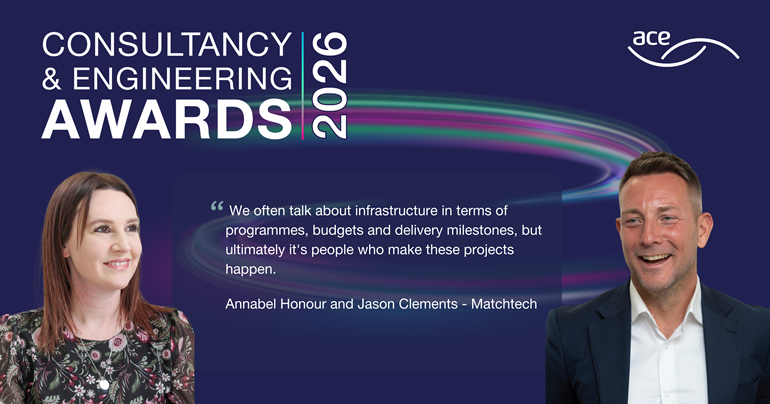
For us, it's about celebrating the people behind the projects. We often talk about infrastructure in terms of programmes, budgets and delivery milestones, but ultimately it's people who make these projects happen.We are looking forward to recognising the achievements of the finalists, catching up with industry colleagues and celebrating a sector that is making a real difference to communities across the UK. Most of all, we are looking forward to seeing some very well-deserved success stories recognised on the night.
The Consultancy and Engineering Awards 2026 are taking place on 1 December. Click here for more details.
Headline sponsor:

News categories: Blog
Related articles:
- Share this page
-

-


