

Engineers have been scaling heights to carry out strengthening work on steep slopes above Gloucester as part of National Highways’ A417 Missing Link scheme.
Running up and over the Cotswolds escarpment in dramatic Jurassic limestone cuttings, the landscape-led scheme is creating a 3.5-mile dual carriageway link between the Brockworth bypass and the Cowley roundabout in Gloucestershire.
Navigating the escarpment, which has one of the highest inland concentrations of landslides in the country, has presented the company and contractor Kier with one of its biggest engineering challenges.
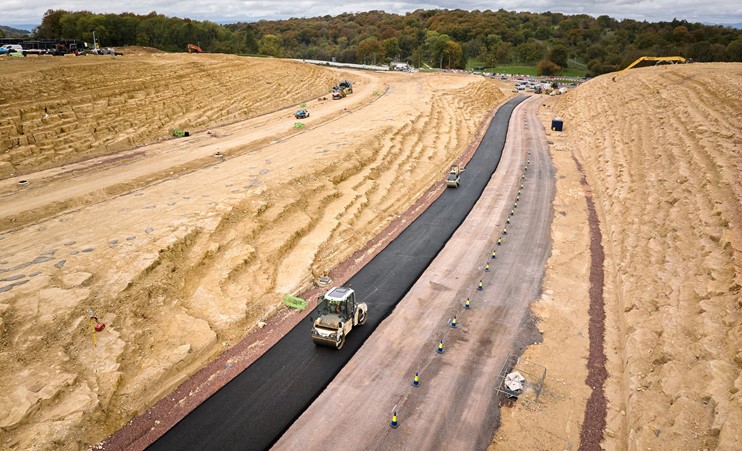
Two deep cuttings – 50 metres wide and up to 19 metres in height – have been excavated through the limestones to make way for a half-mile section of the new road.
And following excavation, engineering specialists GT Jones are now climbing the escarpment with safety ropes to clear loose material from the rock faces and repair and strengthen any faults and voids.
The aim of the scheme is to blend the new dual carriageway into the natural surroundings and enhance the special character of the area – reconnecting landscape, ecology and geology.
And once the road crosses the top of Crickley Hill, it will effectively be hidden from view by false embankments, while the deep rock cuttings will make visible the unique foundations of the Cotswold landscape.

The current rock climbing work will play a vital role in preventing future weathering and instability of the slopes, while creating a natural looking and improved finish.
National Highways senior project manager, Celine Acard, said: “It’s amazing, specialised work and another example of the many unseen facets of work going into construction of the new dual carriageway.
“Our work on this vital scheme goes beyond simply building a new road, but also helping to preserve and enhance the landscape, and we’re really proud of all the engineering, environmental and ecological work being carried out as part of this project.”
Ed Jones, commercial manager at GT Jones, said: “We’ve built strong experience in rock stabilisation, fissure remediation and slope-engineering projects, and we’re applying that expertise directly here on the A417. By combining controlled descaling, targeted remediation and engineered backfilling, we’re able to restore the structural integrity of the limestone escarpment and support Kier and National Highways in delivering a long-term, resilient solution.”
National Highways says the scheme is “progressing well” and the construction of an underbridge at the top of the escarpment this year will enable a traffic switch from the existing A417 early in the new year, when drivers will be able to travel on a stretch of the new road in early 2026.
Alongside the programme of dry stone walling, environmental work is continuing with the planting of trees, along with hedges and the creation of woodland and grasslands to improve sustainability.
So far, 17,000 trees have been planted, the programme of planting and seeding will continue into the spring and following completion of the project, a five-year maintenance period will follow to ensure the successful bedding in and growth of all new trees and shrubs.
In the meantime, the site will shut down for the holiday period, from 19 December to 5 January.
News categories: Infrastructure Intelligence
- Share this page
-

-


