

With ACE’s Delivering Infrastructure 2050 conference just two weeks away, Lucy Webster, managing director of advocacy at Infrastructure Matters, explains why projects need strong voices to turn ambition into reality.
It is nearly a decade since Lucy Webster first joined the team at Tideway - the infrastructure company responsible for delivering the Thames Tideway Tunnel, London's “super sewer”.
The project’s ambition was vast: construct a concrete tube as wide as three London buses below the River Thames to upgrade the capital’s overwhelmed Victorian waste water network and intercept, store and transfer millions of tonnes of raw sewage.
That vision is now reality. The Thames Tideway Tunnel stretches for 25km below the capital and it has already prevented more than 21 million tonnes of sewage from entering the Thames.
As well as keeping 95% of sewage overflows out of the river and drastically cutting pollution, the tunnel scheme is making the Thames cleaner for wildlife and people and has provided landmark new public spaces up and down the riverside.
And crucially for the sector, and the current climate of delivering transformative investment projects, it is a benchmark for large scale infrastructure success.
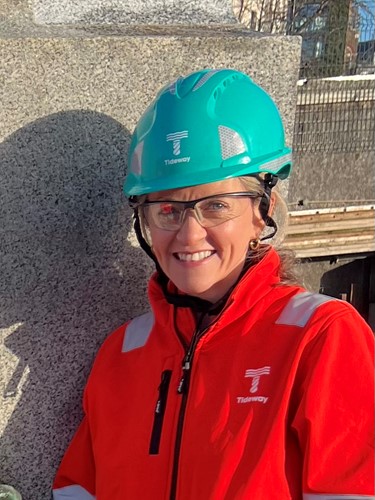
“When I joined Tideway in 2016 it was one of the most ambitious infrastructure projects in Europe and it was exhilarating to join this massive new multi-billion-pound programme” said Lucy Webster, who recently joined Infrastructure Matters as managing director, advocacy.
“There was a sense of excitement and purpose, and a great energy - but we also knew we were starting off against a difficult backdrop.”
Too big, too expensive, unnecessary…
“It is hard to believe now, when Tideway is regularly held up as an exemplar of UK infrastructure, that back in those days it had a ‘controversial’ tag attached to it.”
According to critics, it was too big, too expensive and unnecessary, she said.
“With work taking place across 24 construction sites (and at some, 24-hours a day), there was a genuine fear of what years of upheaval would look like, particularly in densely populated, residential areas where political opposition had been high during the planning stages. Furthermore, there would be little obvious to show for the disruption - no shiny new stations or faster commutes. Our work would remain largely unseen.
“Even harder to believe is that the problem of sewage pollution was virtually nowhere on the public agenda. We were solving a problem that few people outside of a dedicated activist base knew existed. In fact, I would argue that one of Tideway’s greatest legacies is that care of waterways is now a significant part of the national conversation.
“Against that original backdrop it was critical that we built not only support, but advocacy - deep, long-lasting relationships based on trust and on delivering something bigger than any one organisation or group. Support can be passive; advocacy requires people to actively champion a project because they understand its purpose and can see its value. Advocates are there for the difficulties and surprises, as well as the celebrations.
“We did have some foundations to build on, thanks to the huge amount of work done during the Development Consent Order phase (this was critical in achieving consent). But if the project was to have a chance of successful delivery we had to go much further.”
Three elements that helped Tideway succeed
“Firstly, an aspirational vision, set by inspirational leadership (our team loved, and lived and breathed our vision of 'Reconnecting London with the River Thames'),” she added, noting that CEO Andy Mitchell, recognised for his visionary and inclusive leadership, was knighted in the King’s Birthday Honours list.
“Secondly, a genuine commitment to deliver benefits beyond the core infrastructure (if you’re spending billions of pounds on a project then you have the platform, buying power and influence to shift the dial in so many other areas – be it jobs and skills or health, safety and wellbeing).
“Finally, investment in telling and owning our own story.
“It is always a flawed strategy to try and avoid getting noticed - don’t say too much; keep your heads down; be ready to react and minimise the damage.
“On Tideway we turned this around. We were proudly building the Thames Tideway Tunnel and we took every opportunity to tell our story. We utilised our greatest asset - the River Thames - and we set out to be a genuine part of the communities we served as well as an enabler of London’s future success as a global city.
“We adapted our strategy of investing in local communities as we learned more about what real and lasting value looked like; and we gave ourselves permission to be creative - a must when you’re talking about a gigantic sewer tunnel.
“Yes, we had to look at what we were doing through the lens of risk, but we did that by identifying the opportunity, first.”
Significantly, this approach has set the standard for the company as it enters its operational phase; and as it seeks to demonstrates the ongoing value of the new infrastructure. At the time of writing it had prevented more than 20 million tonnes of sewage from entering the Thames.
“If you talk to anyone who worked on Tideway they will speak of their pride. Those of us who left recently, with the Tunnel fully operational, remain firm advocates and that is as true for the people who worked directly for Tideway or our principal supply chain as it is for the partners and stakeholders. We built a genuine coalition of advocates who were prepared to play an active part. That’s different from cheering on from the sidelines.
“If this is the difference between success and failure it also makes for a more fun and rewarding experience for everyone involved.
“The next generation of infrastructure projects are being delivered in a world where public expectations are even higher; scrutiny is immediate; and trust is hard-earned. The ones that succeed will be those that invest as much energy in building advocates as they do in engineering and delivery – they will see advocacy as a strategic asset, not a communications output.
“They will be bold, brave, and generous in sharing success. And take delight, every day, in the fact that they are making history.”
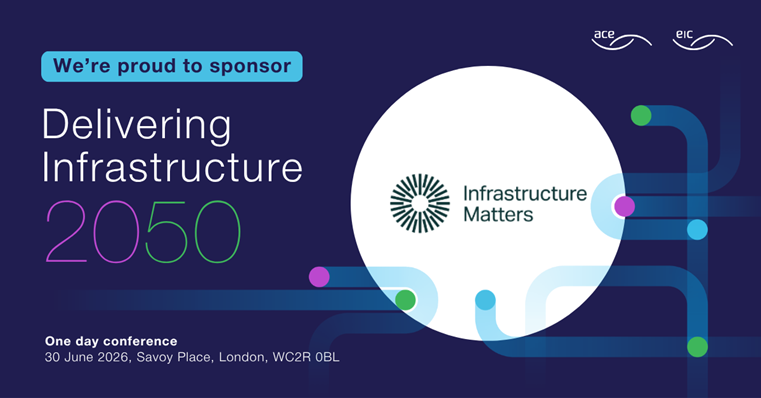
Lucy Webster is managing director of advocacy at Infrastructure Matters. The UK-based consulting firm is a sponsor of the Delivering Infrastructure 2050 Conference, being held in London on 30 June.
www.infrastructure-matters.co.uk
News categories: Infrastructure Intelligence
- Share this page
-

-


