

It’s been a significant year for the infrastructure sector. We've had major announcements from government with the Spending Review, Industrial Strategy, Infrastructure Pipeline and the creation of the National Infrastructure and Service Transformation Authority (NISTA).
The Planning and Infrastructure Bill has spent much of the year making its way through Parliament plus the Procurement Act 2023 went live towards the start of 2025.
Large-scale projects made progress in sectors such as transport, green energy and nuclear. But the market remained a tough one. Data reports across 2025 have seen output make little progress with a fragile sector still waiting to see if big government announcements will speed up delivery and ensure investors commit to projects. Hopefully 2026 will deliver more.
Stories making the headlines during 2025 included:
January
The government confirmed all projects in the New Hospital Programme will be built – but it will take a decade or more longer. Following a review, funding and a “realistic timetable” has been announced to put the New Hospital Programme on track to deliver all of its hospital projects.
Outstanding achievements from the built environment sector have been recognised by the Association for Consultancy and Engineering at its annual awards ceremony. Held in London on 30 January, the Consultancy and Engineering Awards 2024 turned the spotlight on the people and projects raising the bar for excellence across the sector.

February
A major shake-up of the way public bodies buy goods and services went live. On 24 February, the Procurement Act 2023 came into force to "improve and streamline” the way procurement is done.
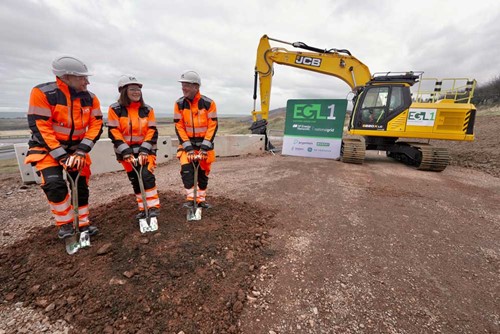
Construction started on a subsea electricity superhighway which will help expand the grid for the future. Eastern Green Link 1, a joint venture between SP Energy Networks and National Grid Electricity Transmission, will transport green electricity for two million homes along 190km of predominantly undersea cable linking the South-east of Scotland with the North-east of England.
March
It was announced that dozens of clean energy projects, including wind and solar power, will jump to the front of the queue for grid connections, as the government looks to improve the planning process. The Planning and Infrastructure Bill, was formally introduced to Parliament, laying the groundwork for a new approach to prioritise new transmission infrastructure which will unlock growth with £200bn of investment and protect households from the rollercoaster of fossil fuel markets.
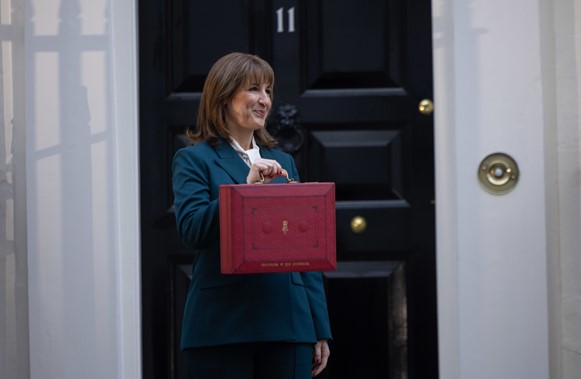
Chancellor Rachel Reeves unveiled the Spring Statement reaffirming the government's commitment to investment and its determination to remove barriers to infrastructure delivery.

April
The National Infrastructure and Service Transformation Authority – NISTA - was launched on 1 April. It saw government bring together the National Infrastructure Commission (NIC) and the Infrastructure and Projects Authority (IPA) to form the single organisation.
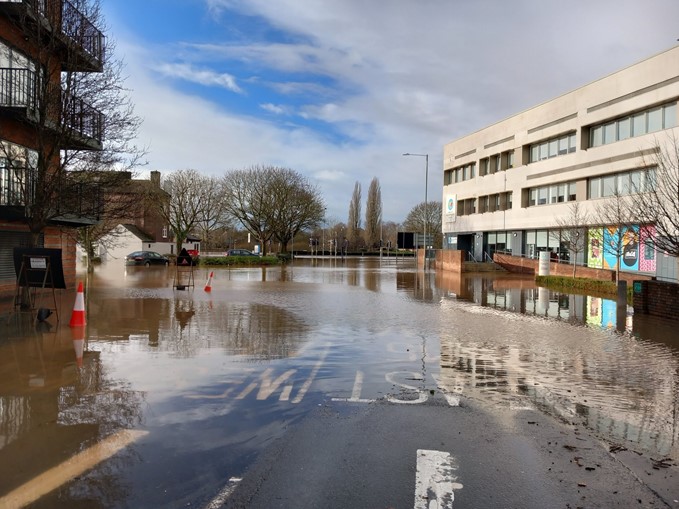
The government and the Environment Agency announced more than 1,000 flood schemes will be built or repaired over the next two years with an investment of £2.65bn.
May
The number of workers across Britain helping build Somerset’s Hinkley Point C power station rose to 26,000 as the site hit peak construction.
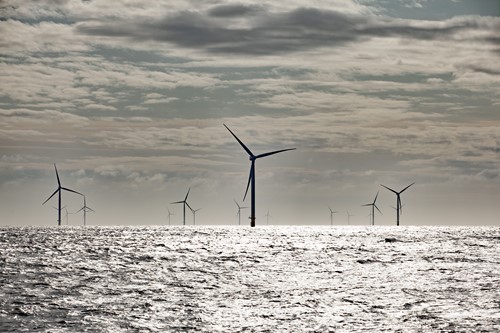
Ørsted announced it was discontinuing the Hornsea 4 offshore wind project in its current form. Hornsea 4– a proposed 2,400 MW,180 turbine development 69km off the Yorkshire Coast – had secured backing from the government’s Contract for Difference (CfD) award in allocation round 6 (AR6) in September last year.
June
New investments across infrastructure were announced as part of the 2025 Spending Review. Chancellor Rachel Reeves set out the government’s spending ambitions, with transport, energy and housing set to benefits from billions of pounds of investment. A £15.6bn package for mayoral authorities to include funding to extend the metros in Tyne and Wear, Greater Manchester and the West Midlands, along with a renewed tram network in South Yorkshire and a new mass transit systems in West Yorkshire was also announced.
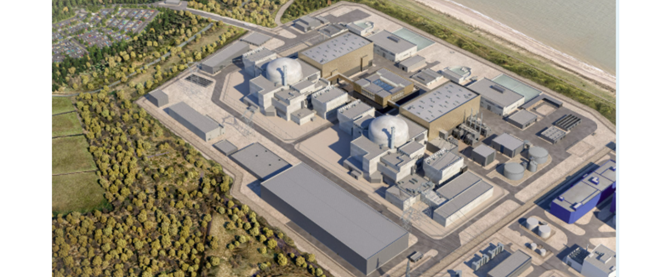
There was £39bn for a new 10‑year Affordable Homes, £30bn for nuclear energy as the “biggest investment in a generation” including £14.2bn in funding for Sizewell C and £9.4bn for UK carbon capture and storage.
The water sector was in need of a “fundamental reset” after “deep-rooted, systemic and interlocking failures”, according to the interim findings from the Independent Water Commission. Sir Jon Cunliffe would go on to list 88 recommendations to rebuild the country’s “broken” water industry later in the summer.
June also saw the announcement of the government new Industrial Strategy to unlock billions in investment and support 1.1 million new jobs over the next decade. It will focus on five key areas of growth: advanced manufacturing, clean energy, creative industries, digital and technology and professional and business services.
July
The Infrastructure Pipeline was published, detailing hundreds of live projects and offering clarity and certainty for industry. The pipeline will provide real-time updates on 780 planned private and public sector projects, enabling industry to plan for the long-term.
New research revealed engineering consultancy generates enough tax to pay for 200,000 nurses and employs more people than the city of Bristol. The research conducted by Oxford Economics on behalf of the Association for Consultancy and Engineering reveals the sector as the critical backbone of national growth and productivity.
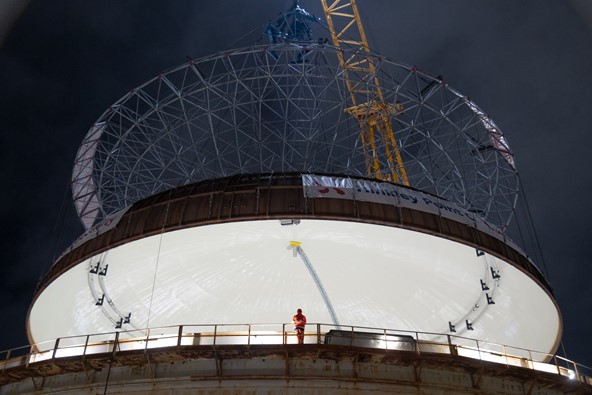
Government gave the green light to build the Sizewell C nuclear power plant after signing off a multi-billion pound final investment decision (FID). And “Big Carl”, the world’s largest crane, successfully placed the 245-tonne dome onto Hinkley Point C’s second reactor building.
August
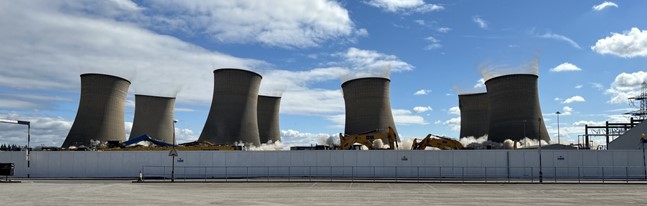
The landscape of North Nottinghamshire was forever changed following the successful demolition of eight giant cooling towers at Cottam Power Station. The towers, each measuring 114m (375ft), were brought down in a matter of seconds on 14 August using half a tonne of explosives.
United Utilities signed an agreement for a £3bn overhaul of the crucial Haweswater Aqueduct, that carries water from Cumbria to 2.5 million customers in Greater Manchester and Lancashire –nearly 5% of England’s population. Construction will get underway in 2026.
September
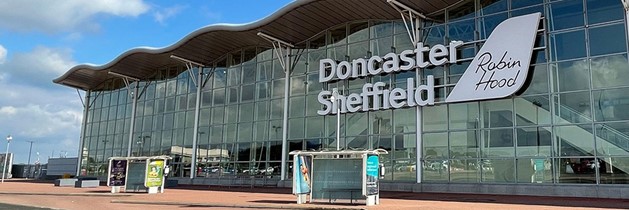
Political leaders in South Yorkshire approved a £160m funding package to reopen Doncaster Sheffield Airport. The South Yorkshire Mayoral Combined Authority signed off on the £159.52m investment that will see commercial flights return to the region.
Gatwick Airport was given the go-ahead by government for its £2.2bn plans for a second runway. The Gatwick Airport Northern Runway application has been granted development consent by transport secretary Heidi Alexander.
The government confirmed it will progress work on the next generation of new towns across England, following publication of an independent report that recommends 12 locations as potential new towns.
October
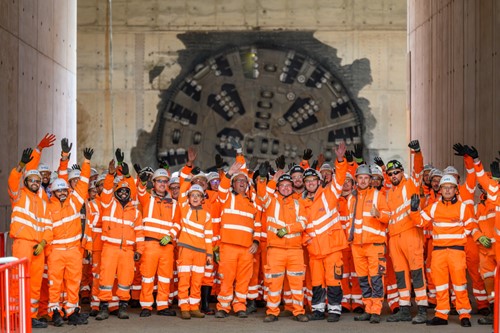
An enormous machine being used to dig HS2’s Birmingham approach tunnels broke through, marking the completion of major tunnel excavation between London’s Old Oak Common and the West Midlands.
Ambitions to train more workers for the clean energy sector were announced – creating 400,000 jobs by 2030.
November
The Railways Bill was introduced to Parliament, legislation that aims to rewire Britain’s railways, including setting up a passenger watchdog to give passengers a voice and hold train operators to account and the creation of Great British Railways (GBR).
Wylfa on Anglesey in North Wales was selected as the site to deliver the UK’s first small modular reactor nuclear power station.
Industry gave a mixed view of the chancellor's Budget, calling for more action to ensure infrastructure's long-term strategy is delivered at pace.
A third runway at Heathrow took a step closer to take off by 2035, as the transport secretary confirmed Heathrow Airport Limited’s (HAL’s) proposal will be used as the scheme to progress the project.
December
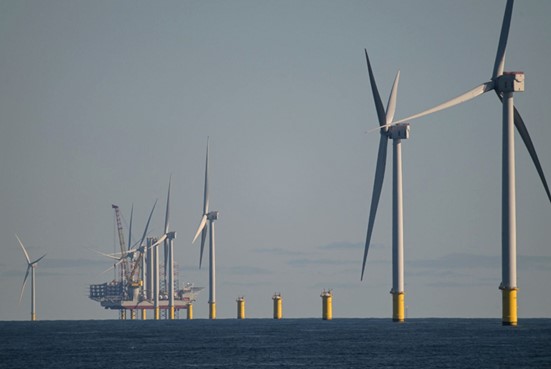
Dogger Bank Wind Farm and delivery partner Seaway7 announced the completion of foundations at the world’s biggest offshore windfarm. All 277 transition pieces on Dogger Bank Wind Farm are now in.
Great British Energy (GBE) has launched a £1bn Energy Engineering in the UK (EEUK) programme to strengthen the UK’s clean energy industry and secure long-term economic growth. It says the scheme will mobilise public and private investment to unlock critical supply chains and create thousands of skilled jobs.
News categories: Infrastructure Intelligence
- Share this page
-

-


